Introduction
Delirium is a condition characterized by acute fluctuations in cognitive function, attention, and awareness and is frequently observed in wards and Intensive Care Units (ICU).1,2 It significantly affects patient outcomes, such as the length of ICU stay, duration of mechanical ventilation, mortality, long-term cognitive function, and medical costs.1,3 Therefore, it is important to assess the risk of delirium and initiate preventive measures at the right time.4 There are numerous risk factors for delirium,5 including age, specific medications, inflammation, pain, immobilization, and sleep disturbance.6,7 Countermeasures against these factors have recently been incorporated into clinical practice (e.g., the ABCDEF bundle approach),8 and the identification of as-yet-unknown factors represents an important mission for us to improve delirium-related outcomes.
One of the risk factors for delirium is the social level of a country, leading to a different healthcare system and resources.9,10 Social factors affecting health, such as the socioeconomic status, education level, social support networks, and living conditions, may significantly increase the risk of developing delirium in patients.9,11 Among them, income is a crucial socioeconomic factor that has an impact on various aspects of an individual’s life, including access to healthcare, education, living conditions, and quality of life. Although Wu et al. investigated the relationship between individual income levels and delirium in critically ill adults,12 they were not associated with the occurrence of ICU delirium due to the limited difference in individual income levels between the low-income (≤ 2,075 US$) and high-income (3,052 US$) groups. They concluded that additional research across different countries/regions is needed to clarify the relationship between income levels and delirium.
We recently performed an online questionnaire survey to examine the prevalence of delirium on World Delirium Awareness Day in 44 countries during 2023 including high-, middle-, and low-income countries. As highlighted in the recent systematic review, conducting a large-scale international study on the awareness day significantly increases awareness and value associated with the topic, delirium this time, and provides an opportunity to improve health behaviours and outcomes.13
Aim
We conducted a secondary analysis to investigate whether income levels in a country are associated with the prevalence of delirium and identify differences in delirium-related practices. The results obtained may have significant implications for healthcare policies and interventions aimed at reducing the burden of delirium.
Design and methods
The present study was a secondary analysis of data collected through the World Delirium Awareness and Quality Survey (WDAD2023), conducted on World Delirium Awareness Day. This international, cross-sectional epidemiological survey recruited clinicians through professional networks and social media. The original survey included responses from 44 countries, of which 41 contributed data to the present secondary analysis. The survey was conducted on 15 March 2023, and data entry was allowed until 19 March 2023. The survey is a global initiative designed to assess the prevalence of delirium, practices, and quality improvement efforts across healthcare systems. The original, for this study developed survey was conducted online using SurveyMonkey, targeting clinicians (see questionnaire in supplement). The report of this survey is in concordance with the Consensus-Based Checklist for Reporting of Survey Studies (CROSS).
This survey included 14 sections with 39 questions. The response of one clinician reflected the conditions of one ward or ICU, not the entire hospital. One clinician was permitted to complete the survey a number of times for different wards or ICUs. To identify potential duplicate responses, participants provided the city, hospital name, and type of ward or ICU. These data were used to identify responses originating from the same clinical unit. Duplicate responses from the same ward or ICU were excluded. The first three sections comprised (1) data protection, (2) the confirmation of inclusion criteria, and (3) data security measures. The next three sections included (4) demographic information, including countries, (5) a participant’s hospital information, including a university hospital, community hospital, and other hospitals, and (6) unit information, including the primary age of patients at their unit and the presence of protocols for various interventions. Protocols included pain management (assess, prevent, and manage pain), spontaneous awakening trial management, spontaneous breathing trial management, sedation management, delirium management, dementia, mobility and exercise, family engagement and empowerment, nutrition management, sleep, physical restraint, and ICU diaries.
The remaining sections included (7) structures and systems for delirium, including the profession primarily assessing delirium and the frequency of delirium assessments, (8) the assessment of delirium and its prevalence at 8 A.M. and 8 P.M. (± 4 hours), (9) non-pharmacological interventions, (10) pharmacological interventions, (11) barriers to delirium management, and (12) free comments. All participants provided their informed consent at the beginning of the questionnaire survey.
Income level differences
Income level differences were based on World Bank data in 2022.14 In World Bank data, economies are classified into four income levels: low, lower-middle, upper-middle, and high. This classification is based on the gross national income (GNI) per capita data in U.S. dollars. GNI was estimated by economists in World Bank country units who primarily used official data published by the countries included. The classification in the present study was conducted on July 1, 2022 and based on an estimate of countries’ GNI per capita for the previous year. According to World Bank data, GNI of low incomes were <$1085, lower-middle $1086–4255, upper-middle $4256–13205, and high incomes >$13205, respectively. Based on World Bank records, we classified data into two groups: the non-high-income group (low, lower-middle, and upper-middle incomes) and the high-income group. This dichotomisation was chosen because the number of responses in the individual non-high-income categories, particularly the low-income category, was limited and separate analyses of delirium-management practices would have resulted in small subgroups and potentially unstable estimates.
Outcomes
The primary outcome was to investigate the epidemiological prevalence of delirium. Delirium status was determined according to the routine assessment procedures used at each participating ward or ICU. The survey did not prescribe a specific delirium assessment tool or diagnostic criterion, and the specific methods used were not recorded. The percentage of patients with delirium was calculated for each site, and the median of these percentages was reported. Patient counts were presented as pooled n/N values, where n represents the total number of patients with delirium and N represents the total number of patients assessed across all participating sites.
Secondary outcomes included baseline characteristics, delirium management, including the presence of protocols and practices for delirium awareness, non-pharmacological delirium prevention, pharmacological interventions for delirium control, and barriers to the implementation of delirium prevention.
Statistical analysis
Baseline characteristics and study variables were summarized between non-high income and high income country groups using a frequency (%) or median (interquartile range) and compared between groups using the chi-square test or Wilcoxon rank sum test as appropriate. We constructed multivariable logistic regression models to explore whether the association between country income level and delirium prevalence persisted after adjustment for the variables available in the survey. Models were constructed separately for background characteristics, non-pharmacological practices, pharmacological interventions, and barriers to delirium prevention. These analyses were exploratory and were not intended to estimate a causal effect. Effect estimates are reported as odds ratios (ORs) with 95% confidence intervals (CIs). Comparisons of delirium-related practices, pharmacological interventions, and barriers were considered exploratory. No adjustment for multiple testing was performed. Double-sided p-values <0.05 were considered to be significant and statistical analyses were performed using JMP statistical software, version 13.1.0 (SAS Institute Inc., Cary, NC, USA).
Results
Among 1,664 available responses, 320 (53 from the non-high-income group and 267 from the high-income group) were excluded because the prevalence of delirium was not evaluated. Therefore, 1344 responses were included in the analysis (Supplemental Figure 1). The non-high income and high-income groups included 159 responses from 17 countries and 1185 responses from 24 countries, respectively. The non-high-income group included low (20 responses from 4 countries), lower-middle (76 responses from 6 countries), and upper-middle incomes (63 responses from 7 countries) (Supplemental Figure 2).
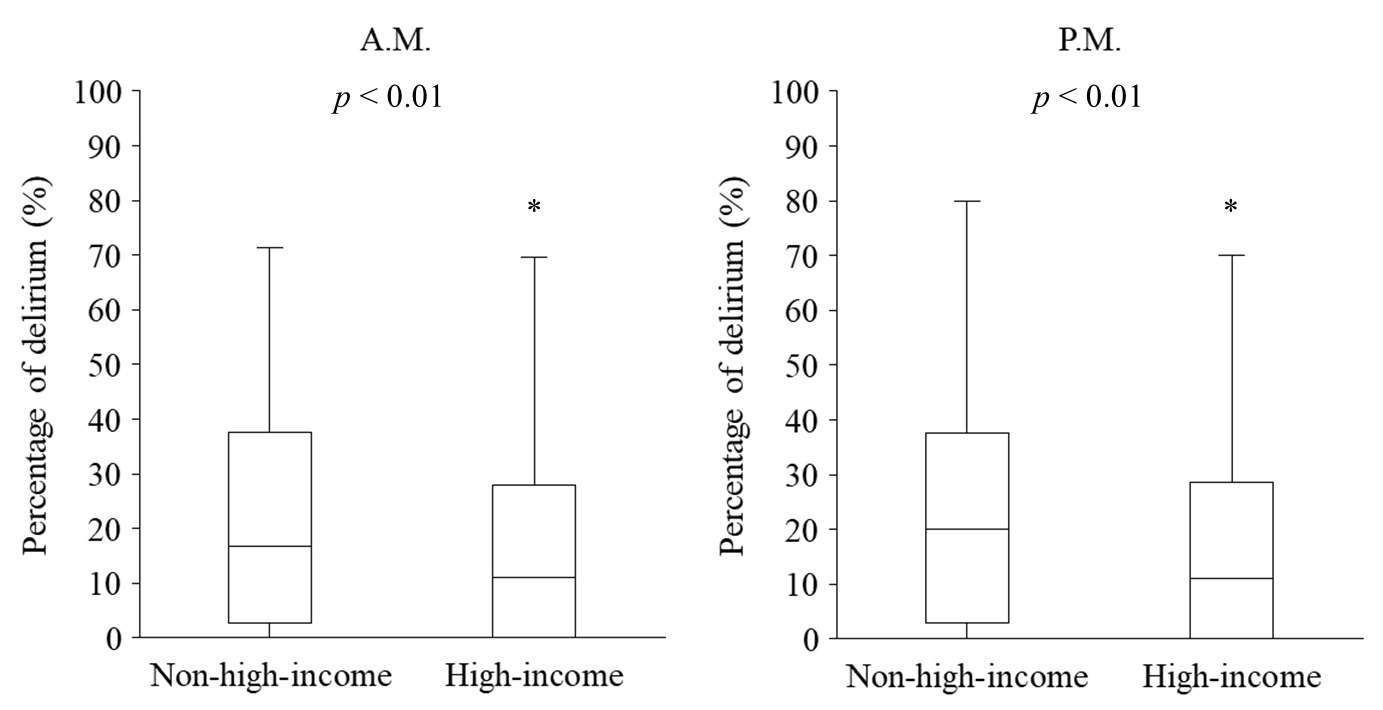
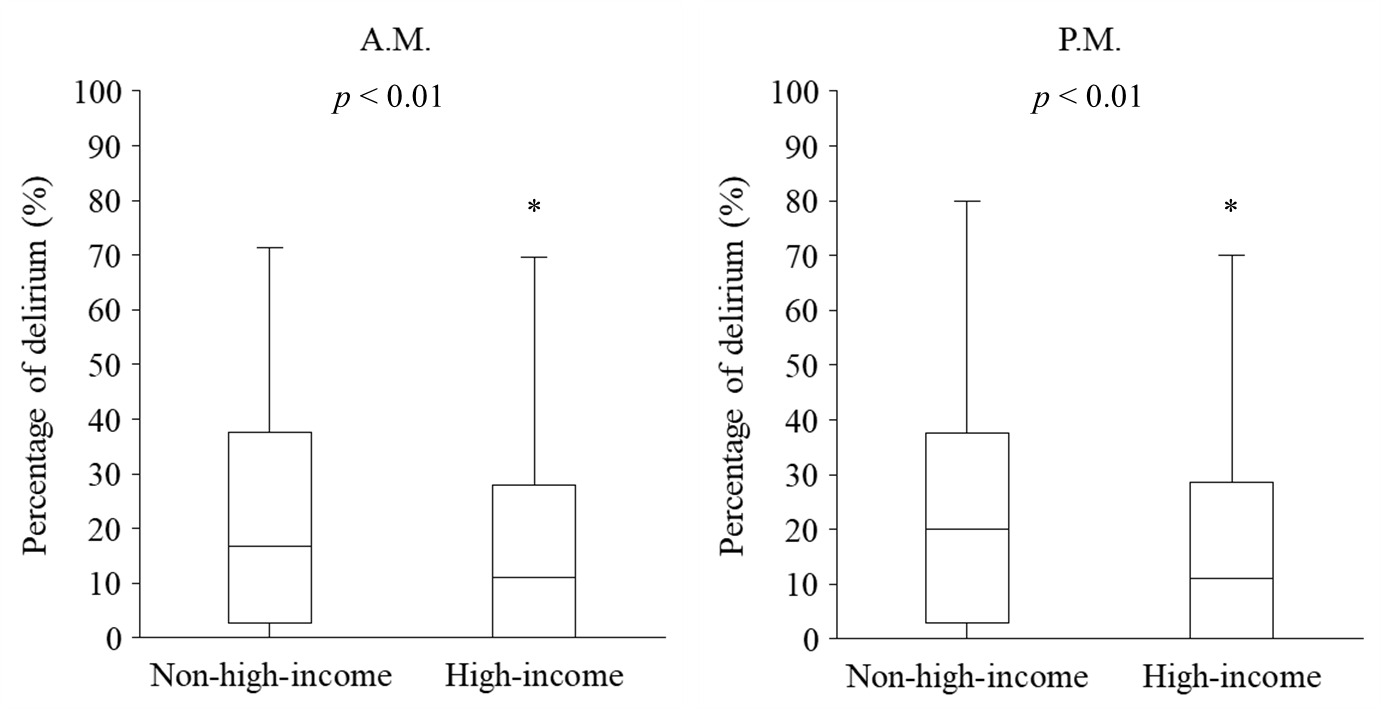
Median ward/unit delirium prevalence was 16.7% (IQR, 2.8%–37.5%) in the non-high-income group and 11.1% (IQR, 0%–27.9%) in the high-income group in the morning (p < 0.01), and 20.0% (IQR, 2.9%–37.5%) and 11.1% (IQR, 0%–28.6%), respectively, in the evening (p < 0.01; Figure 1). The corresponding pooled patient counts were 1,224/5,326 and 2,795/17,805 in the morning, and 1,218/5,290 and 2,713/17,285 in the evening, for the non-high-income and high-income groups, respectively. A delirium prevalence of 0–10% was more frequently observed in high-income groups, while a prevalence of 30–50% was more frequently observed in the non-high-income group in both morning and evening (Supplemental Figure 3). Among the non-high-income group, the prevalence of delirium in the low, lower-middle, and upper-middle income groups was 24.4% (IQR, 13.6%–49.3%), 15.4% (IQR, 4.4%–33.3%), and 16.6% (IQR, 0%–40.0%), respectively, in the morning and 27.8% (IQR, 13.9%–46.9%), 20.0% (IQR, 5.6%–33.3%), and 14.3% (IQR, 0%–40.0%), respectively, in the evening (Supplemental Figure 4). Delirium was less frequently assessed in the non-high-income group in morning or in the evening: 18.2% [IQR, 1.1%–30.0%] vs. 5.0% [IQR, 0%–25.0%], p < 0.01; evening: 18.2% [IQR, 3.2%–33.3%] vs. 3.8% [IQR, 0%–25.0%, p < 0.01].
Baseline characteristics and delirium management practices differed between the two groups, as shown in Supplemental Tables 1 and Supplemental Table 2. The predominant age category reported by units was 18–75 years in both the non-high-income and high-income groups (80.5% and 55.4%, respectively). Units reporting a predominant age category above 75 years were more frequent in the high-income group (19.2% versus 0.6%; p < 0.01 for the overall age-category comparison). The occupation that assessed delirium was mainly a physician in the non-high-income group and a nurse in the high-income group (p < 0.01). The frequency of delirium assessments was once in the non-high-income group, and twice or thrice per day in the high-income group (p < 0.01). Most protocols were implemented less frequently in the non-high-income group. Delirium management protocols were employed for 37.1 and 72.7% (p < 0.01) and mobility and exercise protocols for 27.0% and 52.2% (p < 0.01) of the non-high-income and high-income groups, respectively. Delirium training for health care workers was less common for the non-high-income group (p < 0.01).
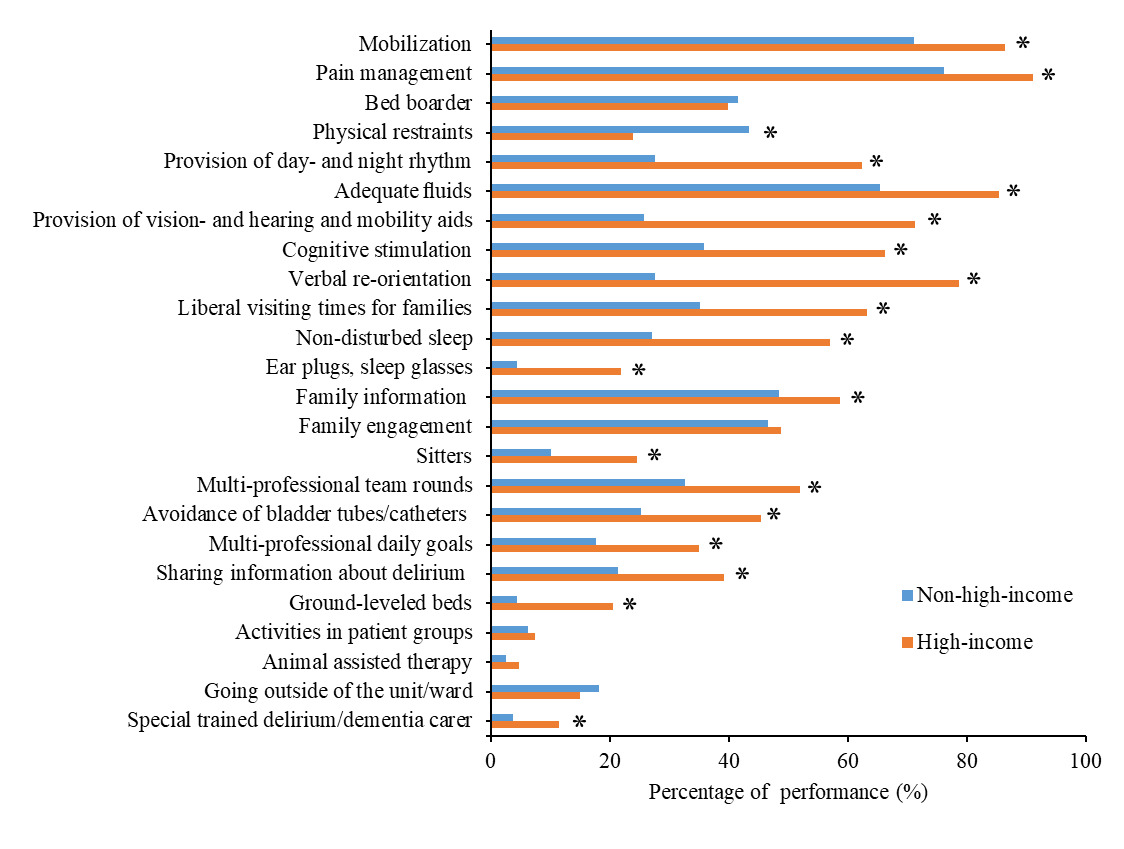
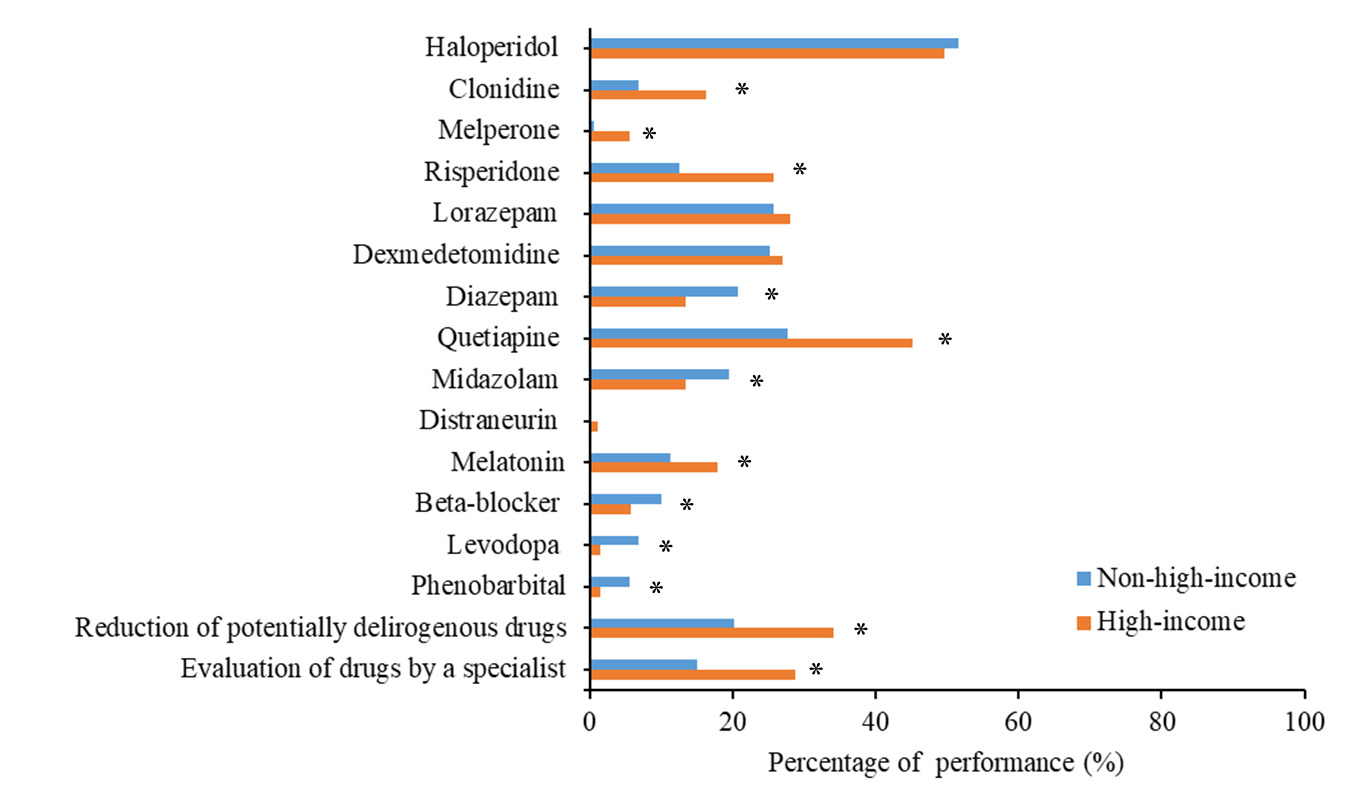
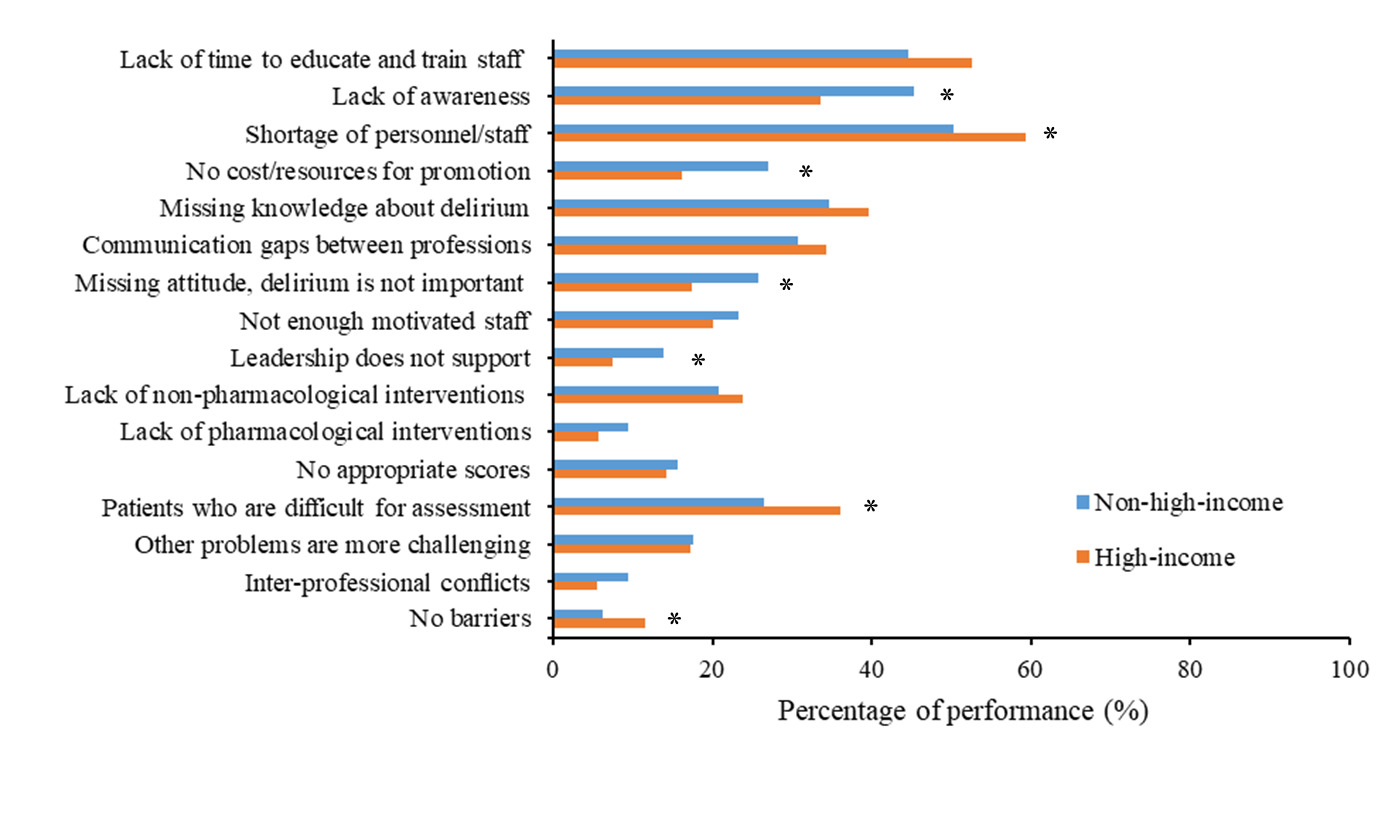
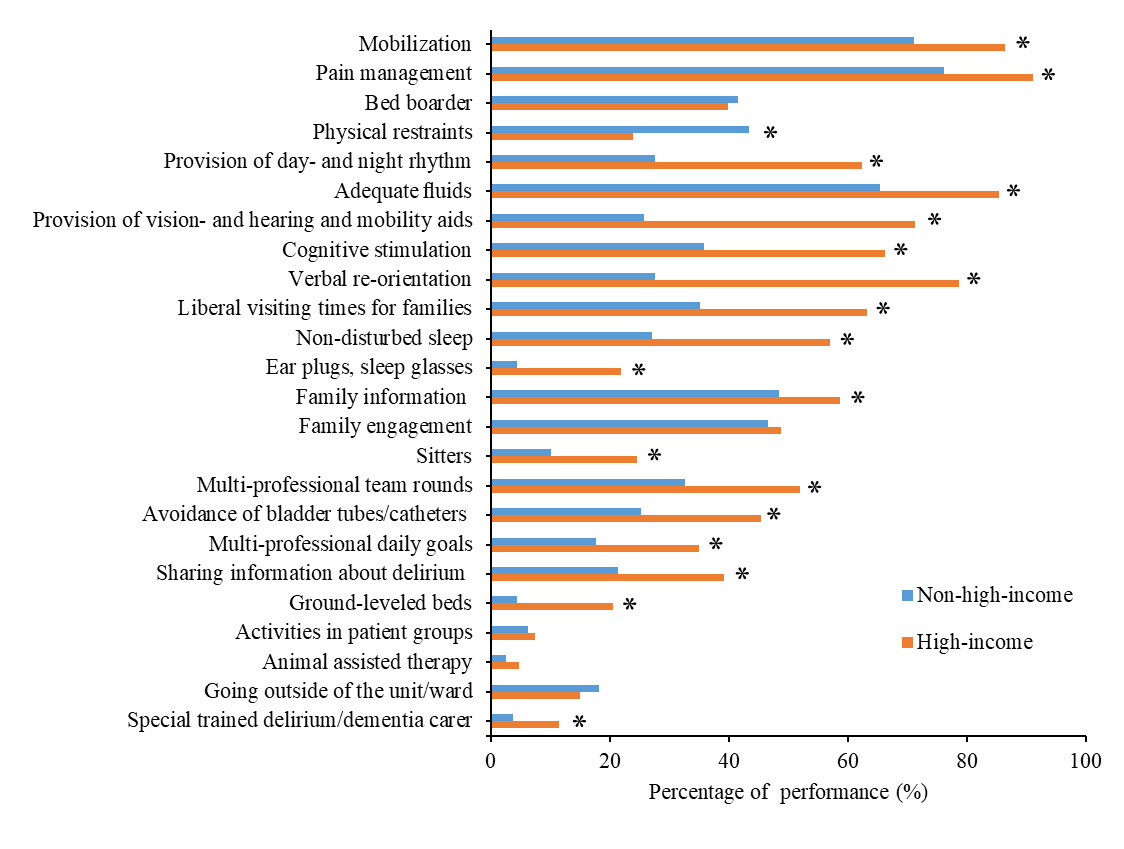
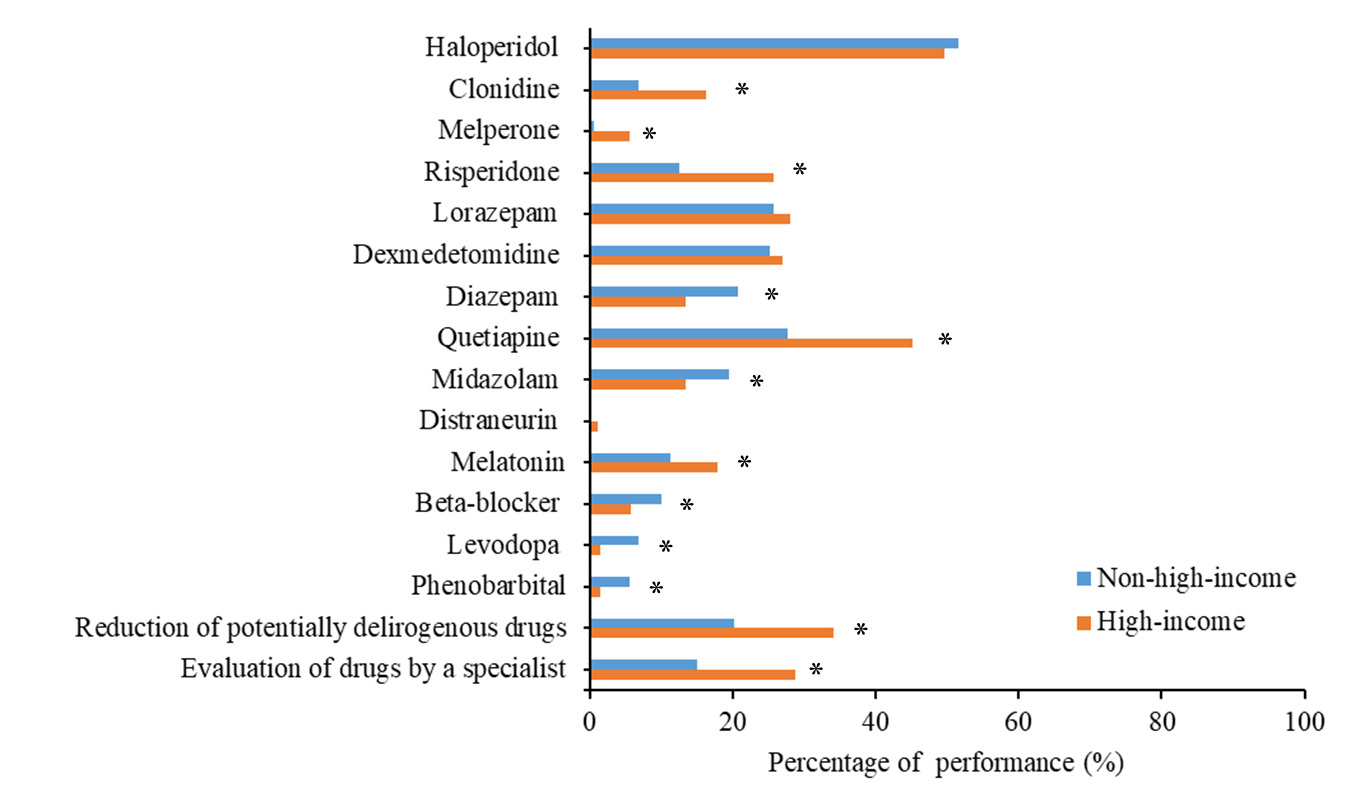
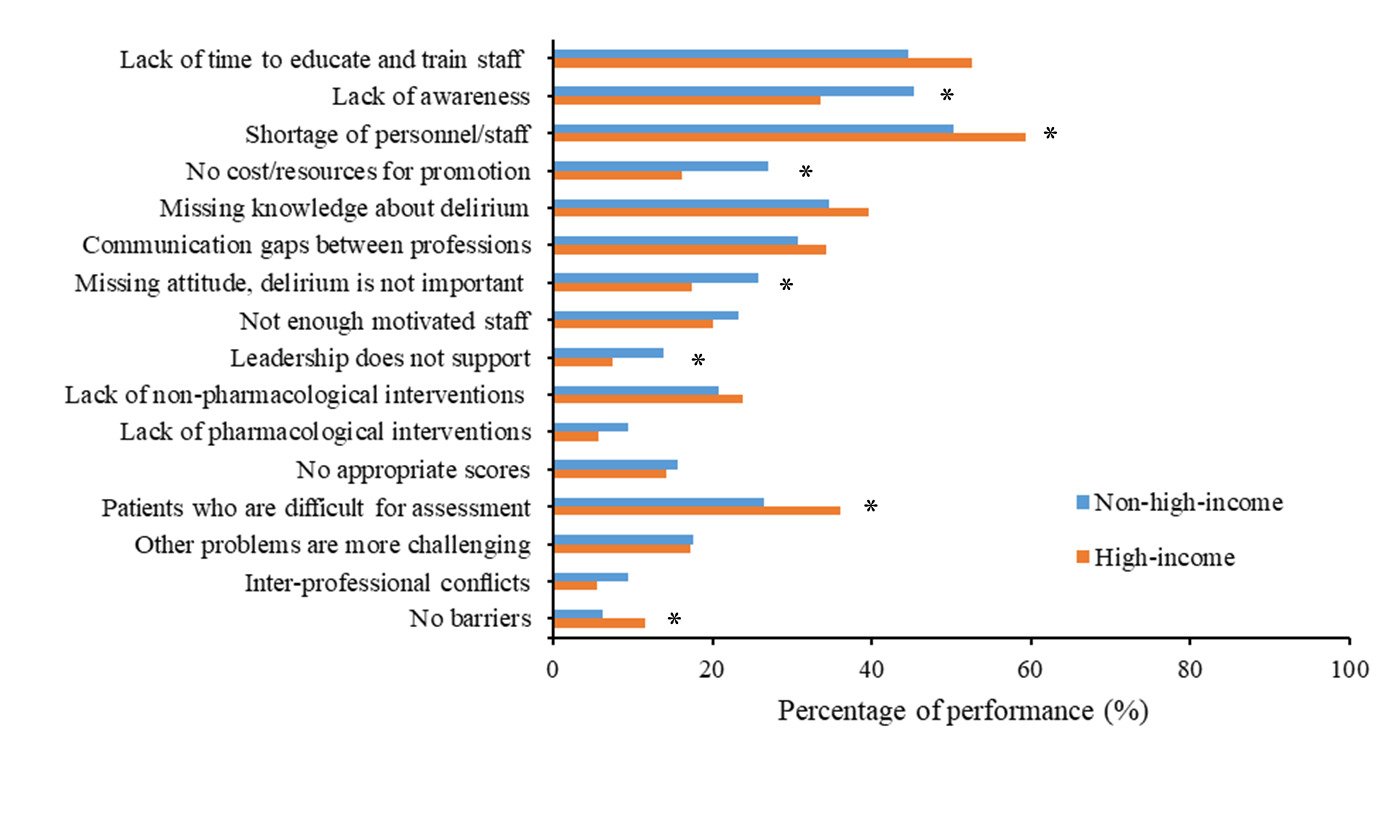
Figure 2 and Figure 3 show differences in non-pharmacological delirium prevention and pharmacological interventions for delirium control. The majority of non-pharmacological interventions were performed less frequently for the non-high-income group. Mobilization was also less frequent for the non-high-income group (71.1% vs. 86.5%, p < 0.01). Liberal visiting times for families were less common for the non-high-income group (35.2% vs. 63.3%, p < 0.01). Among the pharmacological interventions for delirium control, midazolam, beta-blockers, levodopa, and phenobarbital were more commonly used in the non-high-income group, while reductions in potentially deliriogenic drugs and evaluations of drugs by a specialist were more frequently performed in the high-income group. Among the barriers to the implementation and/or use of evidence-based strategies, the lack of awareness, no costs/resources for promotion, missing attitude, and no leadership were barriers to delirium prevention in the non-high-income group, while a shortage of personnel/staff and patients who are difficult to assess were barriers in high-income group (Figure 4).
In exploratory multivariable analyses, the association between non-high-income status and higher delirium prevalence persisted across the different adjustment models (Table 1).
Discussion
In a comparing analysis of 159 facilities in 17 non-high-income countries and 1185 facilities in 24 high-income countries including around 23,000 patients, the prevalence of delirium was higher in the non-high-income group than in the high-income group in both morning and evening. Even after the consideration of different factors, the non-high-income level was consistently associated with a higher prevalence of delirium. To the best of our knowledge, this is the first study to show that the income level in a country might be associated with the prevalence of delirium. Different health-related structures may affect the occurrence of delirium. Non-pharmacological and pharmacological practices for delirium management varied between the non-high-income and high-income groups. These differences need to be considered when taking steps to reduce the burden of delirium on the healthcare system.
Delirium is primarily caused by medical conditions, medication, and various factors in hospitals.15 However, it is important to note that socioeconomic factors, such as income levels, may also affect a person’s health in various ways.16 National socioeconomic factors are related to national regulations, politics, economics, resources, and the environment as well as the healthcare system itself. The World Bank income classification provides a standardised framework for global economic comparisons. However, GNI-based categories cannot capture the substantial cultural, social, economic, and healthcare-system diversity within and between countries and should therefore be interpreted as broad contextual indicators rather than comprehensive measures of national resources. Patients in nations with lower incomes may have limited access to healthcare and lower health literacy.17 These factors may contribute to the overall risk of delirium occurrence. The present results indicate the importance of considering disparities in the national socioeconomic status when preventive measures or practices against delirium, educative initiatives, and implementation of interventions are being discussed on a worldwide scale.
There are a number of differences to note regarding the factors associated with delirium in the non-high-income and high-income groups. Although the age of patients, an important risk factor for delirium,18,19 was significantly lower in the non-high-income group, the group still showed a higher prevalence of delirium. Therefore, the large difference observed in delirium practices may have had a greater impact on the results obtained. Physicians were primarily responsible for delirium assessment in the non-high-income group, whereas nurses more commonly performed this role in the high-income group. Delirium training for healthcare workers was also less common in the non-high-income group. However, profession-specific education and training were not assessed. Therefore, differences in delirium detection cannot be attributed to the assessing profession itself and may also reflect differences in training, assessment frequency, and organisational structures. Since delirium fluctuates during the day, more frequent bedside assessments may increase the likelihood of delirium detection.20
In the ICU, the ABCDEF bundle approach is important for the prevention of delirium.21,22 In the present study, the majority of non-pharmacological interventions differed between the non-high-income and high-income groups. Mobilization is an important factor for the prevention of delirium.4,23,24 However, the protocol for mobilization and early mobilization practices were not frequently performed for the non-high-income group.25,26 This may be improved by educational support; however, the results shown in Figures 2 and 3 demonstrated less resources to promote delirium management in the non-high-income group. Family visitation policies also differed between the groups. Only 35% in the non-high-income group had a liberal visiting time policy for families, in contrast to 63% in the high-income group. The presence of family members and their support on site is an important part of the ABCDEF bundle approach for the prevention of delirium.27 Other interventions showed various degrees of significant association with delirium, such as pain management,4 physical restraints,28 the provision of a day and night rhythm,29 adequate fluids,30 the provision of vision, hearing, and mobility aids,31 cognitive stimulation32 verbal re-orientation,33 non-disturbed sleep,34 ear plugs,35 sleep glasses,36 family information,37 sitters,38 multi-professional team rounds,39 the avoidance of bladder tubes/catheters,40 multi-professional daily goals,41 sharing information on delirium,42 ground-leveled beds, and a specially trained delirium/dementia carer.43 Since substantial evidence for non-pharmacological interventions has demonstrated their preventive effects,44,45 large differences in non-pharmacological practices between groups most likely contributed to the higher prevalence of delirium observed in non-high-income countries.
Regarding pharmacological interventions, the non-high-income group were more frequently administered diazepam and midazolam, one of the side effects of which is delirium, while high-income countries were more likely to take steps to reduce the use of potential delirogenic drugs and perform drug evaluations by a specialist. Although benzodiazepines are a well-known risk factor for delirium,46 but 20% of the delirious patients received benzodiazepine in the non-high-income group. According to recent studies and recommendations in the guidelines, the majority of pharmacological interventions aimed at controlling delirium did not improve the occurrence of delirium, length of ICU stay, length of hospital stay, or mortality.47–49 Polypharmacy is a risk factor for delirium,50 and the less frequent use of sedation or agents listed in Figure 3 may be associated with a reduction in its recurrence.48 Interventions by clinical pharmacists are one of the options that efficiently reduce the duration of delirium, and a multidisciplinary approach is essential for the successful prevention of delirium.51
Future studies are warranted on differences in these delirium-related factors between the non-high-income and high-income levels to assess and report their impact on the high prevalence of delirium in the non-high-income group. These analyses may support the development of adapted delirium protocols and educational initiatives. The majority of delirium-related protocols were not commonly performed for the non-high-income group, and only one third of the non-high-income group received a delirium management protocol. Furthermore, this questionnaire survey revealed that delirium training was not common in the non-high-income group. Therefore, international support for delirium management is needed in non-high-income countries, which will reduce the burden of delirium on patients and their families in non-high-income countries.
Limitations
The present epidemiological study has several limitations. Generalizability was limited by a selection bias because this secondary analysis included 41 countries, which is only 20% of all countries. Delirium assessment methods may have differed between participating facilities, as no specific assessment instrument or diagnostic criterion was prescribed or recorded. This heterogeneity may have influenced delirium detection and limits direct comparisons between facilities. Some adjusted variables may represent mediators or consequences rather than confounders. The multivariable analyses included numerous covariates relative to the smaller non-high-income group and may therefore remain susceptible to overfitting, multicollinearity, and sparse data. Delirium-management practices may mediate the association, while pharmacological interventions may follow delirium onset. As temporal relationships cannot be established in this cross-sectional study, adjustment may introduce overadjustment, reverse causation, or collider bias. Therefore, multivariable analyses should be interpreted as exploratory rather than causal. The prevalence of delirium was higher in the non-high-income group than in the high-income group in both the morning and evening assessments. This association remained after adjustment for the facility- and practice-level variables available in the survey. However, relevant patient-level characteristics and potential confounders were not collected. Therefore, differences in patient case mix may have contributed to the observed association, and the findings should be interpreted at the epidemiological rather than the individual patient level. Furthermore, the participating facilities did not represent all healthcare facilities within each country. Moreover, income levels were classified by country data, not individual data. Individual incomes may have varied in the same income level. Combining low-, lower-middle-, and upper-middle-income countries may have obscured heterogeneity in delirium-management practices between these settings. Also, 320 responses, including 267 from high-income countries, were excluded because delirium prevalence was not assessed. Their exclusion may have introduced selection bias and influenced the observed prevalence and between-group comparison. Reasons for the absence of delirium assessment were not collected and could therefore not be evaluated. Therefore, further studies with a focus on individual income data in different countries and areas are warranted. Another limitation is that this was a one-day point prevalence study. Therefore, the results obtained may have relied on the conditions to collect data on the survey day. In addition, the present study did not investigate outcomes after the occurrence of delirium, which needs to be examined in the future large-scale study. Finally, multiple exploratory comparisons were performed without adjustment for multiplicity, increasing the risk of false-positive findings. These results should therefore be interpreted as descriptive associations rather than confirmatory evidence.
Conclusions
The non-high-income level in a country might correlate with a higher prevalence of delirium even after adjustments for differences in backgrounds, non-pharmacological practices, pharmacological interventions for delirium control, and barriers against delirium practices. Large differences were observed in delirium-related practices. Strategies to reduce the burden of delirium on the healthcare system need to be tailored by income levels in consideration of practice differences. The development of specific delirium protocols for countries with low resources should be considered and evaluated.
Acknowledgement of collaborators
The authors gratefully acknowledge the participating clinicians for supporting the 2023 WDAD Study Team and survey.
Author Contributions
All authors NN, KN, KM, KO, SI, GB, JB, MvdB, GC, CRC, ME, MG, GHLC, MH, MMJ, KK, TM, AM, RKN, ESO, MOC, MCP, PN, HL, RvH, and KL made substantial contributions to the conception and design of the study, the acquisition, and critical revision of the manuscript. NN, KN, KM, KO, SI, and KL performed the first analysis, interpretation of data and drafted the manuscript, NN designed the figures, supervised by HL, RvH, PN, and KL. All authors NN, KN, KM, KO, SI, GB, JB, MvdB, GC, CRC, ME, MG, GHLC, MH, MMJ, KK, TM, AM, RKN, ESO, MOC, MCP, PN, HL, RvH, and KL approved the final version for publication and agree to be accountable for their own contributions and for ensuring the accuracy and integrity of the work as a whole.
Ethics statement
The study has been approved by the Ethics Committee of the University Hospital Mannheim (2022-617), and registered in the German Registry for Clinical Trials (https://drks.de/search/de/trial/DRKS00030002 ), August 22nd 2022.
Funding sources
None
Declarations of Interests
The following co-authors have listed conflicts of interest: G.C. is the President of the Australian Delirium Association. M.G. has received royalties for the edited books (Manual of ICU Procedures, Textbook of Ventilation Fluids, Electrolytes, and Blood Gases) from the publisher Jaypee Brothers Medical Publishers and has received financial support to attend the Annual Conference of Indian Society of Critical Care Medicine. G.H.C. has spoken on Humanization of Healthcare (Pfizer) and was supported by Pfizer to attend the COMMEC 2022 meeting. E.S.O. is supported by NIH/NIA funding (unrelated to this manuscript), received honoraria to present at the Edmund Beacham Annual Current Topics in Geriatrics, has patents issued or pending, and was the 2022 President of the American Delirium Society. M.O.C. received funding unrelated to this manuscript from Novo Fonden, Lundbeck Funden, and Dagmar Marshells Fond. H.L. is funded by the NIA 1AGK23076662-02, serves as a board member and 2023 conference co-chair for the American Delirium Society, and serves as the web committee chair for the American Thoracic Society, Nursing Assembly. She has received royalties for keynote addresses at nursing conferences in 2022 and received a travel scholarship to attend the 2023 DECLARED conference in Sydney, Australia. R.V.H received support from OrionPharma to attend meetings and/or travel.
Availability of data and materials
All data generated or analysed during this study are included in this published article and its supplementary information files.
Figure legends
Supplemental Figure 1. Flowchart of data included in the present study
Supplemental Figure 2. Visualization of non-high-income countries and high-income countries.
The income classification was based on the World Bank classification issued on 1 July 2022, using 2021 GNI per capita.
Red: non-high-income countries, Blue: high-income countries
The study included 41 countries. The 24 high-income countries were Australia, Austria, Canada, Chile, Denmark, Germany, Greece, Iceland, Ireland, Israel, Italy, Japan, the Netherlands, New Zealand, Norway, Oman, Portugal, Republic of Korea, Saudi Arabia, Spain, Switzerland, the United Arab Emirates, the United Kingdom of Great Britain and Northern Ireland, and the United States of America. The 17 non-high-income countries were Afghanistan, Algeria, Argentina, Egypt, Grenada, India, Iraq, Jordan, Lebanon, Libya, Mexico, Palestine, Peru, Sudan, the Syrian Arab Republic, Tunisia, and Turkey.
Supplemental Figure 3. Frequency of delirium prevalence
The frequency of delirium prevalence significantly differed between the non-high-income and high-income groups both in morning (P = 0.04) and evening (P < 0.01).
Supplemental Figure 4. Prevalence of delirium by the income level classification
The number of responses, with one response representing one ward or one ICU of a hospital included in the analysis, was 20 for the low-income, 76 for the lower-middle, 63 for the upper-middle, and 1185 for the high-income classification.
Acknowledgements
- Appendix 1a: Acknowledgement of collaborative authors (WDAD Study Group), who should be tagged to the publication in PubMed as group-co-authors.
- Appendix 1b: Acknowledgement of participating clinicians.